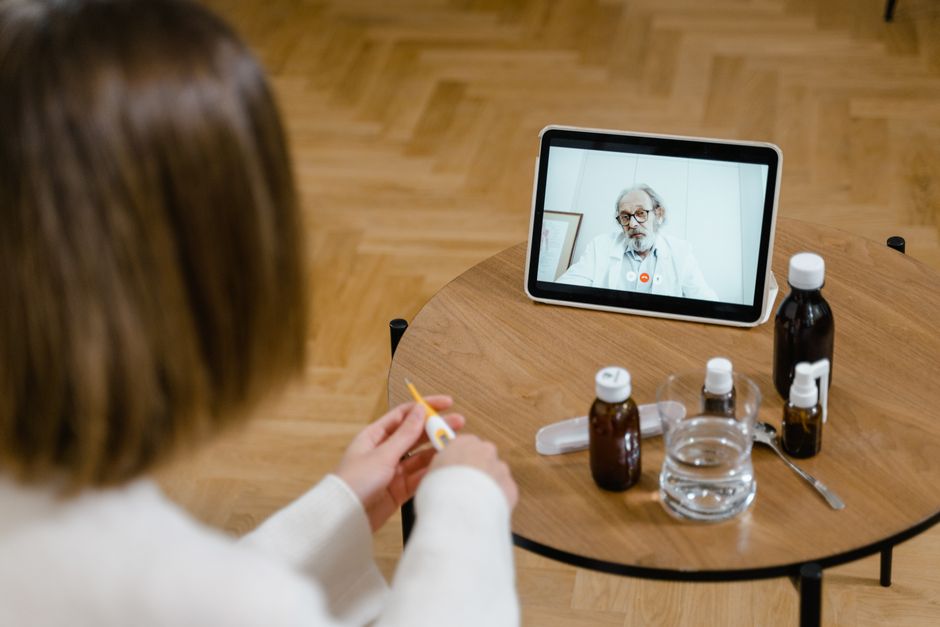
If you have spent any time navigating the UK healthcare landscape over the last few years, you have likely noticed a shift. The days of physically waiting in a surgery to ask for a referral are slowly being superseded by digital-first models. But when it comes to specialized treatments like medical cannabis, patients often find themselves stuck in a loop of uncertainty: “Do I need to go back to my NHS GP for a referral, or can I just book a specialist consultation online?”
The short answer is: you do not necessarily need https://articoolo.com/healthtech-innovation-how-the-uk-is-modernising-medical-cannabis-access/ an in-person appointment, but you do need an integrated data trail. Let’s look at how the 2026 medical cannabis patient journey actually functions, cutting through the startup noise to look at the clinical reality.
The Regulatory Landscape: NICE NG144 and Specialist Oversight
First, let’s be clear about the rules. In the UK, medical cannabis is not a "first-line" treatment. According to NICE guideline NG144, cannabis-based medicinal products (CBMPs) are typically reserved for patients who have already tried licensed treatments without success. This is a critical point that many clinic websites gloss over in favor of a "quick sign-up" button.

When you seek a specialist consultation, you aren't just paying for an opinion; you are paying for a clinical risk assessment. The specialist needs to see that you have exhausted conventional options. This is where the friction point of the "GP referral" often arises.
You do not need to physically walk into your GP practice to get a referral letter. In fact, most specialist clinics now utilize a "Summary Care Record" (SCR) approach. You provide the clinic with access to your medical records, or you request a copy from your GP surgery via the NHS App, and the specialist reviews it. The "referral" is essentially the specialist verifying that you have a documented diagnosis for which cannabis may be an appropriate adjunctive treatment.
Telehealth Normalization: What Does the 2026 Patient Journey Look Like?
By 2026, telehealth in the UK has matured from a "crisis-response" tool into a standard component of clinical infrastructure. We are moving away from fragmented, clunky digital interfaces towards integrated, patient-centric pathways.
When you start your research into cannabis clinics, you’ll notice a standard remote consultation pathway. Here is how it usually breaks down:
Eligibility Screening: You complete an online questionnaire. This is a data-collection step to ensure you meet the basic criteria (e.g., age, diagnosis history, previous medication attempts). Medical Record Request: Rather than a GP referral letter, you grant the clinic permission to request your SCR. This eliminates the need for an in-person GP visit. Clinical Triage: A clinician reviews your documents. If there are gaps in your history (e.g., your notes don't clearly state you’ve tried two licensed treatments for your condition), this is where the process often stalls. The Specialist Consult: A video call with a specialist doctor on the GMC Specialist Register.The "friction" many patients complain about isn't the technology—it’s the documentation. If your GP records are patchy, the specialist will struggle to sign you off. This is why having an accurate, up-to-date health record is infinitely more useful than an in-person chat with your GP.
Why You Might Still Need an Online GP Appointment (UK)
There is a scenario where booking an online GP appointment in the UK is actually a strategic move before booking a cannabis clinic. If your NHS records are out of date—for example, if you have tried a new medication but it wasn't noted, or if your diagnosis requires an update—the cannabis specialist will reject your application.
Instead of seeking a referral, use an online GP platform (like the NHS app or your surgery’s patient portal) to message your doctor. Ask them to ensure your "Medication History" and "Problem List" are current. This is the most efficient way to clear the hurdle before you even look for a specialist.
Comparison: The Traditional Referral vs. The Digital Pathway
Feature Traditional GP Pathway Digital-First Specialist Pathway Speed Slow (Weeks/Months) Fast (Days) Documentation Referral Letter (Paper/Digital) Summary Care Record (SCR) Convenience In-person attendance required Remote/Asynchronous Clinical Oversight Standard GP Specialist (GMC Registered)Avoiding the Pitfalls: What to Watch Out For
As someone who has worked in healthtech for nearly a decade, I’ve seen my share of "miracle cure" marketing. If a clinic promises that you are "guaranteed" a prescription or pushes you to pay before they’ve even seen your medical history, run away. That is not how legitimate medical oversight works.
When investigating clinics, focus on these specialist referral questions to determine if they are running a legitimate operation:
- "Can I access my own medical records via the NHS App to upload, or must you request them?" (Legitimate clinics offer both). "What happens if my application for a prescription is declined after the consultation?" (There should be a clear refund or partial-refund policy). "Are you a CQC-registered provider?" (This is non-negotiable in the UK).
Be wary of clinics that over-rely on "startup jargon." If they talk about "disrupting the wellness space" rather than "clinical outcomes and patient safety," they are likely prioritizing growth over your long-term health. You want a provider that treats cannabis as a pharmaceutical intervention, not a lifestyle product.
The Reality of Repeat Forms and Data Collection
Yes, it is annoying to fill out the same form five times. You’ll provide your name, DOB, and medical history to the screening bot, then again to the reception team, and perhaps again to the specialist. In the current 2026 landscape, this redundancy exists because systems are often siloed.
However, do not view this as a bureaucratic hurdle—view it as a safety check. One client recently told me learned this lesson the hard way.. A clinic that is overly eager to skip the "repeated forms" is a clinic that is skipping the "safety checks." If you want a prescription that is safe, evidence-based, and legal, you need to accept that the digital pathway is a series of gates. If you don't pass one, you shouldn't be moving to the next.
Final Thoughts: Your Path Forward
I'll be honest with you: you do not need an in-person gp appointment to start your journey. You need an organized, digital-friendly medical history. By leveraging the NHS App to ensure your records are complete, you can move straight to a specialist consultation via a secure, remote, and fully regulated portal.
Remember: the goal is not to find a clinic that says "yes" the fastest. The goal is to find a specialist who understands your history, respects NICE guidance, and provides a sustainable treatment plan. The technology is just the bridge; the clinical data is the foundation. Keep your paperwork clean, verify the CQC registration of your chosen clinic, and proceed with a clear understanding of your own health journey.